Let’s talk about baking powder and baking soda. These two ingredients show up in a lot of baking recipes, and they look almost the same in the pantry. But they do different jobs in your batter or dough.
If you’ve ever wondered why a recipe calls for one and not the other, or sometimes both, here is the simple explanation.
What Is the Difference Between Baking Soda and Baking Powder?

Want to save this recipe?
Enter your email & I’ll send it to your inbox. Plus, get great new recipes from me every week!
Both baking soda and baking powder are leavening agents. That means they help baked goods rise and become light instead of dense.
Baking soda is pure sodium bicarbonate. It needs an acid in the recipe to activate it. When baking soda mixes with an acidic ingredient like lemon juice, vinegar, yogurt, or buttermilk, it creates carbon dioxide gas. Those tiny bubbles expand during baking and make the batter rise.
If you ever made a baking soda volcano in school, you have already seen this reaction in action.
Baking powder works a little differently. It already contains baking soda plus an acid, usually cream of tartar. It also includes a small amount of starch to keep everything stable in the container.
When baking powder gets wet, it starts producing gas bubbles that help your batter rise.
Texture differences
If you look closely, these two powders are slightly different.
Baking soda has a more grainy texture.
Baking powder is softer and finer.
What Is Baking Soda?
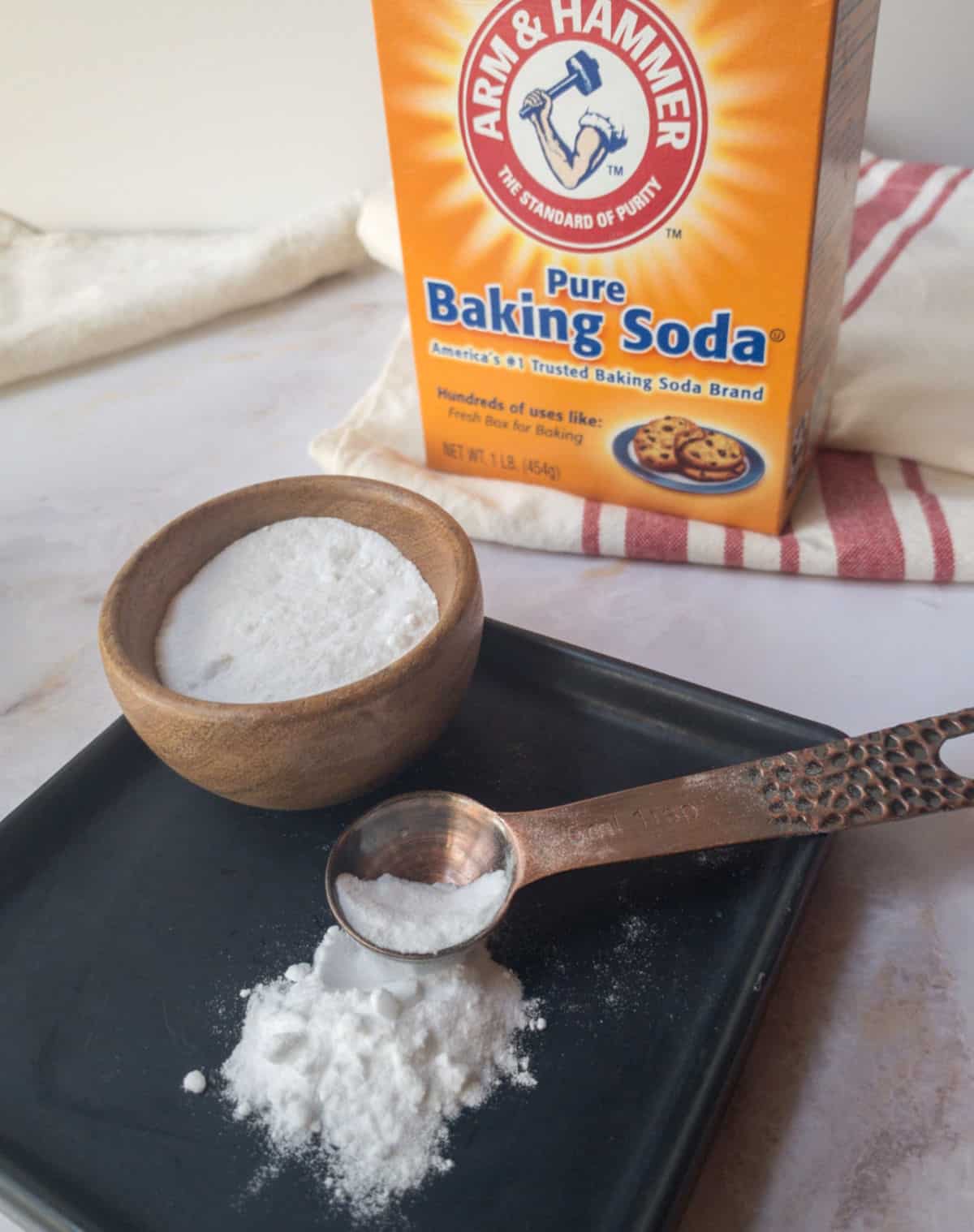
Baking soda is a strong leavening agent made from sodium bicarbonate. It reacts quickly with acidic ingredients to release carbon dioxide gas.
That gas forms bubbles in the dough or batter, which creates lift while baking.
Baking soda also helps baked goods brown. That is why it shows up in many cookie recipes.
One thing to watch for is using too much. Extra baking soda can leave a metallic or bitter taste.
Outside the kitchen, baking soda also works as a household cleaner. It reacts with grease and oils to help break them down.
What Is Baking Powder?
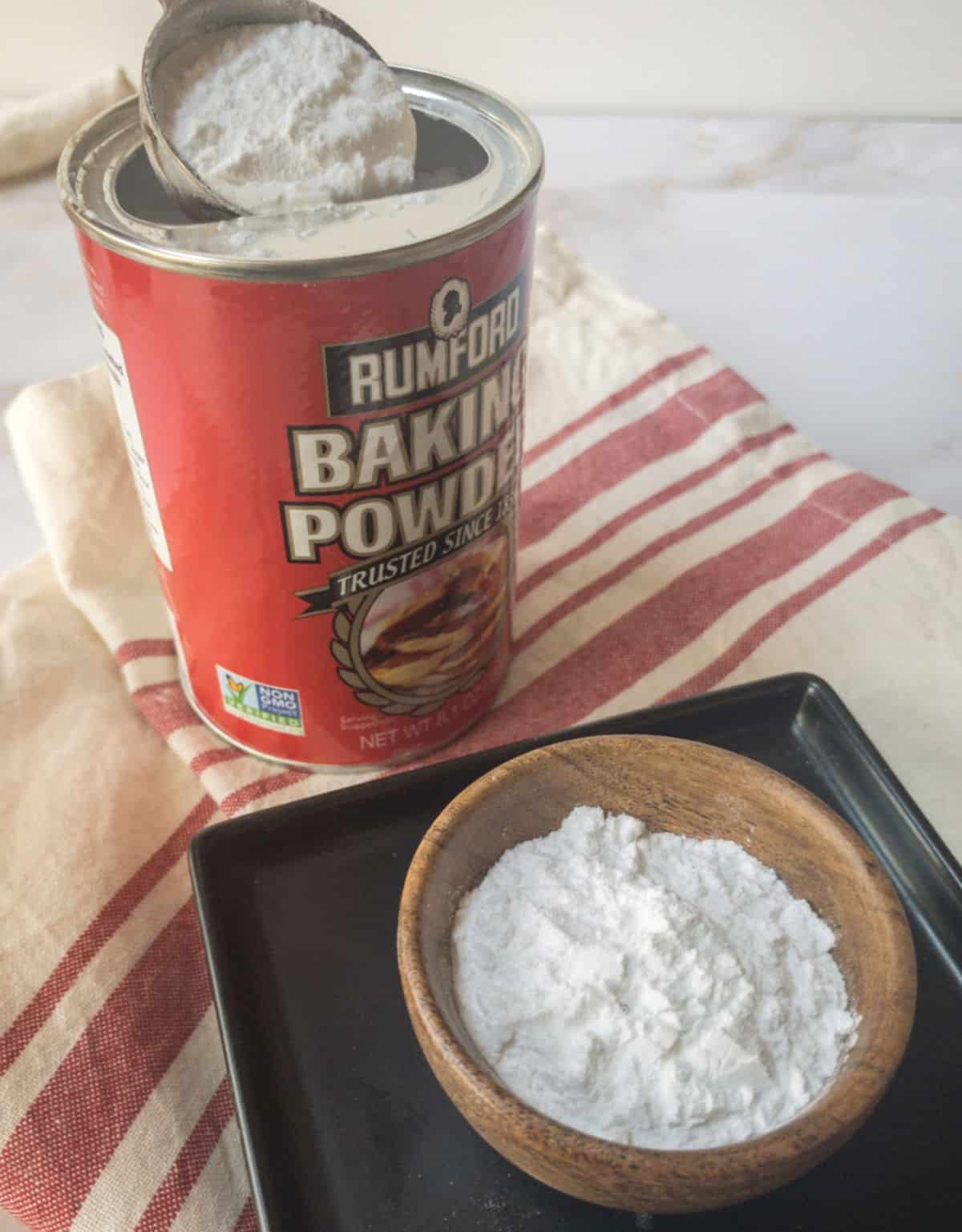
Baking powder is another leavening ingredient, but it is a combination product. It contains baking soda, an acid, and a little cornstarch.
When baking powder mixes with liquid, it releases carbon dioxide gas. Those bubbles expand in the oven and give baked goods a lighter texture.
Baking powder also helps create a finer crumb in cakes and muffins.
What Is Double-Acting Baking Powder?
Most baking powder sold in stores today is double-acting.
That means it creates lift in two stages. The first reaction happens when the powder gets wet. The second reaction happens when the batter heats up in the oven.
This two-step process gives baked goods a stronger and more reliable rise.
Common brands like Rumford, Clabber Girl, Davis, Argo, and Bob’s Red Mill all make double-acting baking powder.
Should You Use Both Baking Soda and Baking Powder?
Yes, some recipes need both.
Baking soda reacts with acidic ingredients, which helps balance flavor and create lift. But too much baking soda can leave a strong taste.
Adding baking powder gives the batter extra rising power without affecting flavor as much.
Many cakes, muffins, and cookies use both for that reason. Like these Blueberry Cornmeal Muffins that bake up tall and tender.

What Do Baking Soda and Baking Powder Have in Common?
These two ingredients share a few things.
Both are white powders that look very similar in the container.
Both release carbon dioxide gas when mixed into the batter.
Both help baked goods rise and become lighter.
Timing also matters for both. They should be added to the batter shortly before baking. If the mixture sits too long, the gas escapes, and the recipe will not rise as well.
What Happens If You Leave Them Out?
Leaving out baking soda or baking powder will usually result in a dense cake.
Without those rising agents, cakes, muffins, and cookies stay flat and heavy.
If a recipe calls for one of them, it is there for a reason.
Can You Use Baking Soda Instead of Baking Powder?
You can, but you have to adjust the amounts.
Baking soda is much stronger than baking powder. If a recipe calls for 1 tablespoon of baking powder, you can use 1 teaspoon of baking soda instead.
You will also need an acidic ingredient to activate the baking soda. Lemon juice, vinegar, or buttermilk all work.
A simple guideline is to add twice as much acid as baking soda. For example, 1 teaspoon baking soda with 2 teaspoons of an acidic ingredient.
Can You Use Baking Powder Instead of Baking Soda?
Yes, but it takes more baking powder to do the same job.
If a recipe calls for 1 teaspoon of baking soda, you can use 3 teaspoons of baking powder instead.
Because baking powder is weaker, the rise may not be quite as strong, but it will still work in many recipes.
Recipes That Use Baking Soda
Baking soda works best in recipes that already contain acidic ingredients.
Common examples include:
- Waffles
- Muffins with fruit or yogurt
- Cookies
- Cakes made with buttermilk or citrus
- Some quick breads
The acid activates the baking soda and creates the lift.
Recipes That Use Baking Powder
Baking powder works well when there is little or no acid in the recipe.
You will often see it in:
- Biscuits
- Scones
- Muffins
- Quick breads like banana bread
- Light cakes
These baked goods depend on baking powder to rise.
How Long Do Baking Soda and Baking Powder Last?
Both ingredients last a long time in the pantry, but they do lose strength over time.
Baking powder usually lasts about 12 months.
Baking soda can last about 18 months.
They will not make food unsafe to eat if they are old. They just stop working as well, which means your baked goods may not rise.
Keeping them tightly sealed and away from moisture helps them last longer.
The Bottom Line
Baking powder and baking soda both help baked goods rise, but they work in different ways.
Baking soda needs an acid to activate it.
Baking powder already contains an acid and works on its own.
Knowing the difference makes it easier to understand recipes and get better results in the kitchen.
Once you know how they work, choosing the right one becomes simple.
Get the full tips and tricks for Baking Powder vs. Baking Soda
Happy Baking!
Jere’
One Hot Oven