Every year around Easter, grocery stores fill their shelves with those little egg-dye kits. You know the ones. Tiny tablets, flimsy wire dippers, and a few cups of neon colors.

Want to save this recipe?
Enter your email & I’ll send it to your inbox. Plus, get great new recipes from me every week!
They work fine, but after a while, they start to feel a little predictable.
One year, I started experimenting with something different in my kitchen. Instead of using the kits, I tried dyeing eggs with ingredients I already had on hand, like vegetables, spices, and even tea. The results were surprisingly beautiful, and the colors looked softer and more natural than the bright store-bought versions. Pasted text
Once you try it, it’s hard to go back to the little tablets.
Why Natural Egg Dyeing Works
Eggshells are slightly porous, which means they absorb pigments from liquids quite easily. When you simmer certain foods in water, they release natural color compounds. Once the liquid cools, hard-boiled eggs can soak in that dye bath and gradually take on the color.
The process is simple, but the fun comes from seeing what colors appear. Some ingredients create bold shades, while others produce soft, earthy tones that feel more like something you’d see in nature.
And honestly, half the fun is the surprise.
Kitchen Ingredients That Dye Eggs Beautifully
You might be surprised how many common foods create good dye colors. A quick look through your pantry or refrigerator is usually all it takes.
Here are some of the most reliable options.
Fruits
Fruits with deep pigments work especially well.
Blueberries create blue-purple shades
Blackberries give a rich purple tone
Cherries produce pink or red hues
Pomegranate juice makes a rosy pink color
Cranberries can create soft pink tones
Spices and Herbs
Spices are small but powerful when it comes to color.
Paprika creates warm orange tones
Coffee grounds make earthy brown shades
Cumin can produce a yellow tint
Chili powder creates orange-brown hues
Tea and Coffee
Beverages can also add subtle coloring.
Black tea produces brown tones
Green tea can create pale green shades
Strong coffee adds a warm tan color
Vegetables
Vegetables are some of the most reliable natural dyes.
Beets produce pink or red tones
Red cabbage creates surprisingly bright blue shades
Spinach can tint eggs green
Turmeric produces bold yellow
Yellow onion skins make orange tones
Red onion skins can create brownish purple
Many people’s favorite surprise color comes from red cabbage. When boiled and used as a dye bath, it often turns eggs a beautiful blue.
How the Dye Process Works
The process itself is very straightforward.
First, hard-boil your eggs and let them cool. While the eggs are cooking, prepare your dye baths by simmering your chosen ingredients in water for about 30 minutes. This extracts the color from the food.
Once the liquid has developed color, strain out the solids and add a little vinegar. The vinegar helps the pigment attach to the eggshell.
Then simply place the eggs into the dye bath.
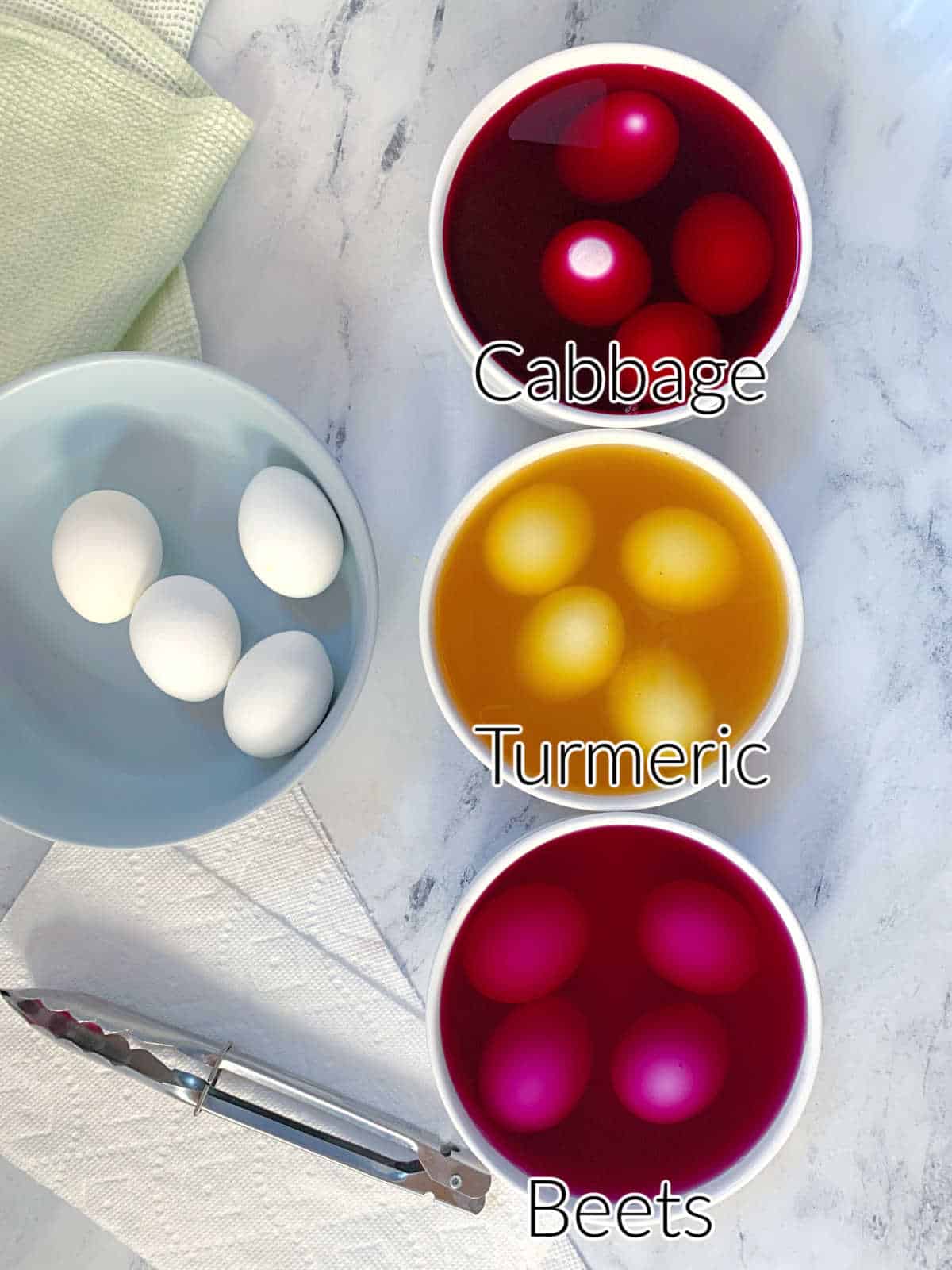
Leave them for 10 to 20 minutes for lighter colors, or longer for deeper shades. For the strongest colors, you can leave the eggs soaking in the refrigerator overnight.
When the color looks right, remove the eggs and let them dry completely.
Creating More Colors
One of the most enjoyable parts of natural egg dyeing is experimenting with combinations.
Just like paint, colors can mix.
Blue and yellow dyes can create green eggs
Red and yellow dyes produce orange tones
Red and blue dyes create purple shades
If you want to try mixing colors, it helps to boil a few extra eggs so you have some to experiment with.
A Simple Trick for Better Color
If the dye doesn’t seem to stick well, there’s an easy fix.
Before placing the eggs into the dye bath, wipe them lightly with white vinegar. This removes any oils or residue on the shell and helps the color attach more evenly.
Clean shells absorb color much better.
A Quick Safety Reminder
Since these are hard-boiled eggs, they should still be treated like food.
Keep the eggs refrigerated before and after dyeing. Any cracked eggs should be discarded, and dyed eggs shouldn’t sit out at room temperature longer than about two hours.
If you plan to eat them later, store them in the refrigerator after they dry.
A Tradition That Feels a Little More Personal
One of my favorite things about dyeing eggs this way is that it turns the process into a small kitchen project instead of just dropping tablets into cups.
Every batch turns out a little different.
Sometimes the colors are bold, sometimes soft and speckled, but they always feel more personal than the bright artificial colors from the kits. When you display them in a bowl or Easter basket, they look like they came straight from nature.
And that’s part of the charm. Make sure to read the full article on dying Easter Eggs, and have fun mixing colors.

About One Hot Oven
I’m Jere’ Cassidy, the baker behind One Hot Oven, where I share from-scratch baking tips and classic desserts that actually work in a real home kitchen.