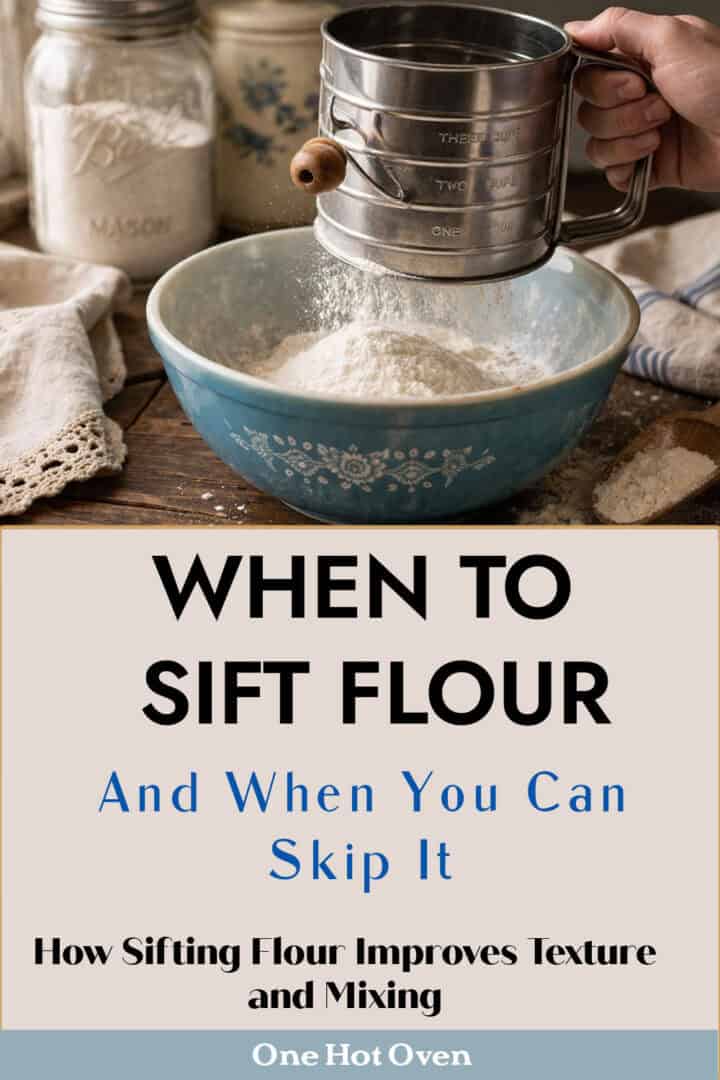
Sifting flour may feel like an old habit, but it’s one I still stand by. It’s quick, simple, and can make a real difference in how your baked goods turn out. You can skip it sometimes, sure, but more often than not, taking that extra minute sets you up for a better result.
Want to save this recipe?
Enter your email & I’ll send it to your inbox. Plus, get great new recipes from me every week!
This page may contain affiliate links; please see my disclosure for details.
I’ve been baking long enough to know which steps matter and which ones you can skip. Sifting flour is one I still come back to, especially when I want a lighter, more even texture.
What Sifting Actually Does
Sifting breaks up clumps, adds air, and evenly distributes everything in your dry mix. That matters more than people think.
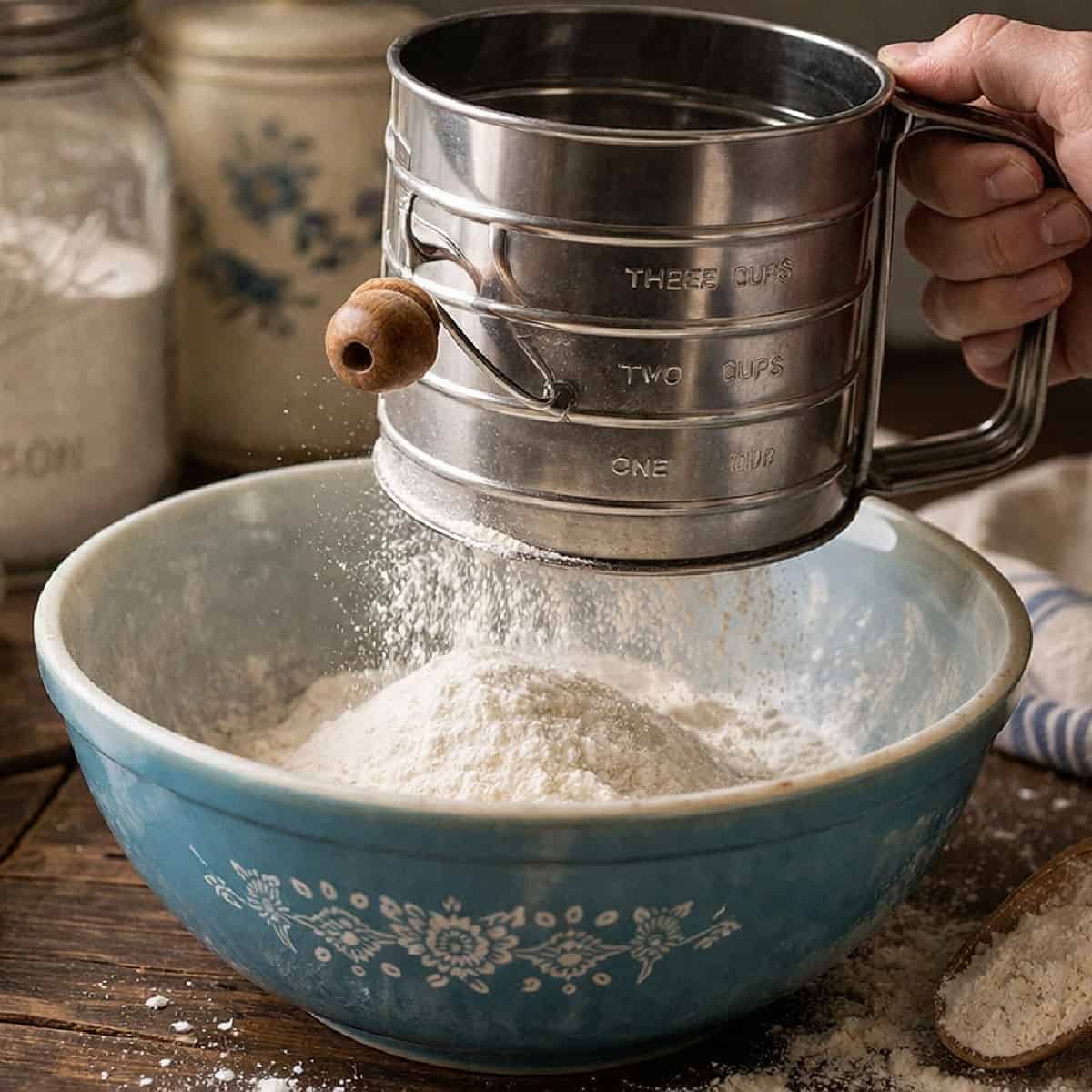
Even though flour today is more refined, it still gets packed down sitting in the bag or canister. Sifting loosens it up so you’re not starting with heavy, compacted flour. That alone can change the texture of your batter or dough.
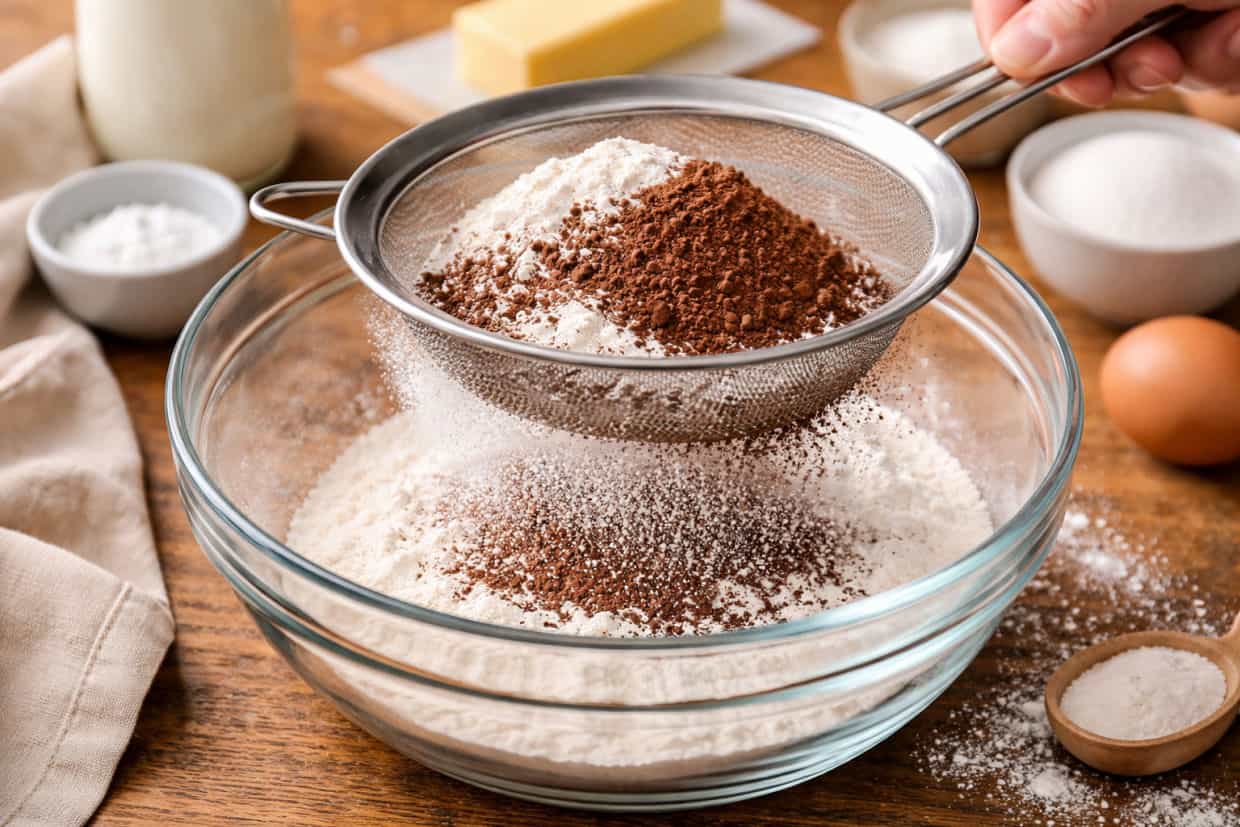
And here’s the part a lot of people overlook. If you’re baking with other dry ingredients like cocoa powder, baking powder, baking soda, or spices, sifting does a better job of incorporating them than just stirring. It spreads everything out evenly, so you don’t end up with little pockets of leavening or clumps of cocoa in your batter.
Why I Still Recommend It
If you want lighter cakes, softer muffins, and better texture overall, sifting gives you a head start.
It’s especially helpful for:
- Cakes where you want a tender crumb, like this Raspberry Chiffon Cake, which bakes up light, airy, and soft, with a delicate texture that really benefits from well-sifted flour.
- Recipes with cocoa powder or powdered sugar, like these Cacao Nib Shortbreads, where you’re mixing flour and cocoa powder and want everything evenly blended.
- Any batter where smooth texture matters
- Recipes using baking powder or baking soda where even distribution really counts
It’s not about being fancy. It’s about consistency. When everything is evenly mixed and aerated from the start, the bake is more predictable.
When You Can Get Away Without It
There are times you can skip it and be just fine.
Cookies, brownies, and sturdier quick breads are more forgiving. If you’re in a hurry, you can whisk your dry ingredients well and move on. Just make sure you whisk long enough to break up any lumps and fully combine everything.
The Tools That Get It Done
You don’t need anything special, just something that breaks up the flour and mixes it evenly.
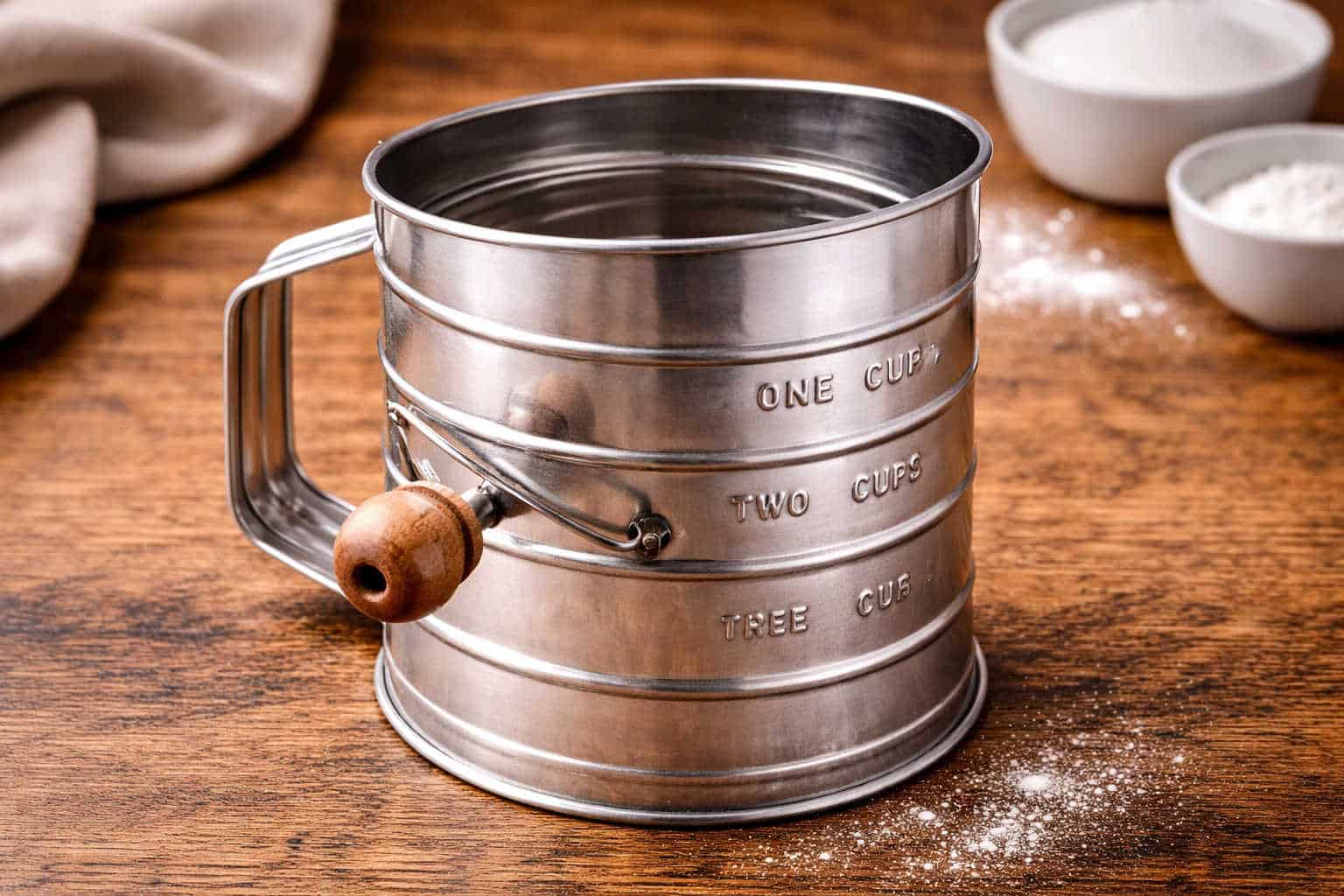
Old-Fashioned Flour Sifter
This classic tool does the job well. A few turns and your flour is light, airy, and evenly mixed. Mine’s an old one I’ve had forever, but you can still pick up a hand-crank sifter like this one if you want one like this.
Fine Mesh Strainer
No sifter? A fine mesh strainer works just as well. Tap or shake it gently and you’ll get the same result.
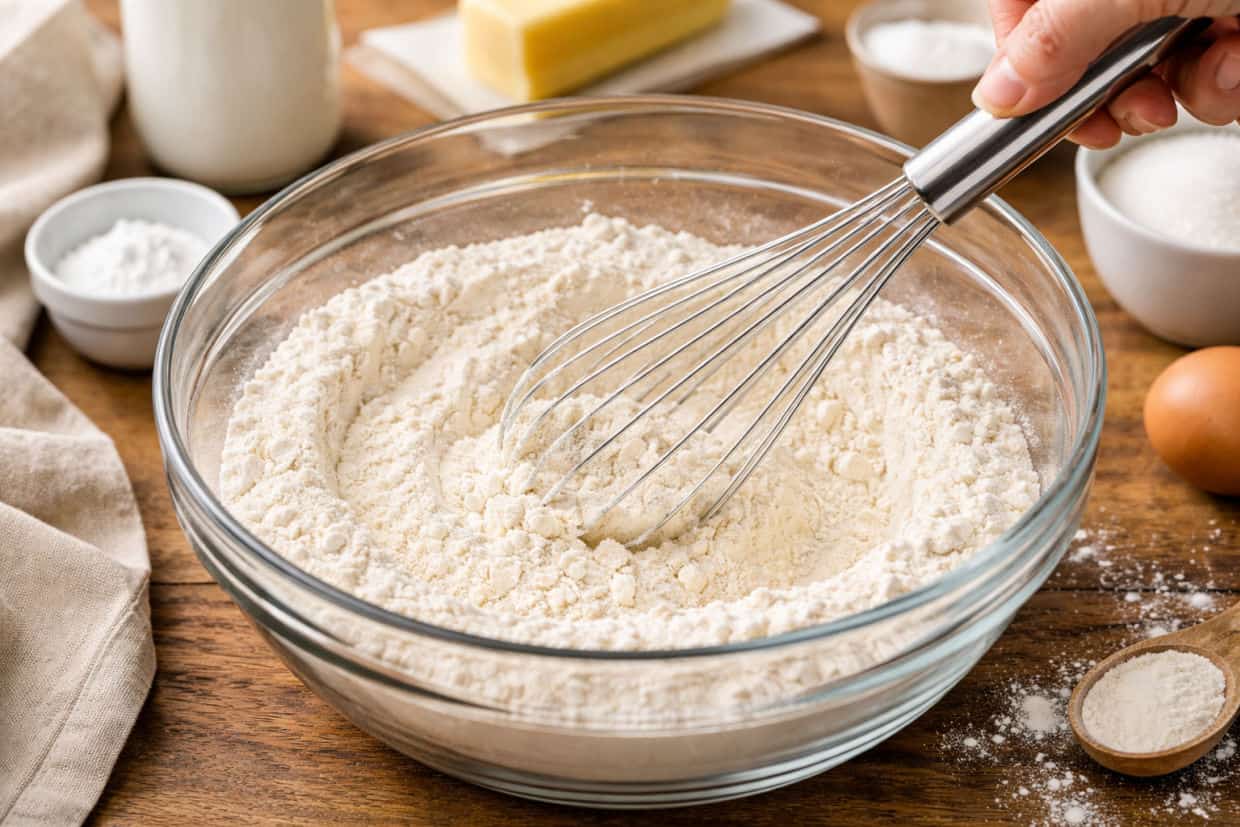
Whisk
A whisk is a solid backup. It won’t aerate quite as much, but it will mix and lighten your dry ingredients enough for most everyday recipes.
The Bottom Line
Here’s the straight answer.
You can skip sifting and still bake something good. But if you want a lighter texture, better mixing of your dry ingredients, and more consistent results, it’s worth doing.
It’s a small step, but it’s one of those habits that quietly makes your baking better every time.
If you’re ready to put that into practice, these 18 Cookie Recipes That Turn Out Right are a good place to start and let you see the difference for yourself.
If you’ve got flour in the pantry, give sifting a try the next time you bake and see the difference for yourself.
And if you do, let me know how it turns out. I always like hearing what’s baking in your kitchen.
Subscribe here for more great recipes, and follow One Hot Oven for more tasty sweet and savory recipes! Pinterest | Instagram | Facebook
Thank you for stopping by the One Hot Oven blog. Please leave a comment to say hello or tell me what you are baking; I always love hearing from fellow bakers. Do you have any questions or want to chat about the recipe? Please visit my About page for information, and I’ll be happy to help!
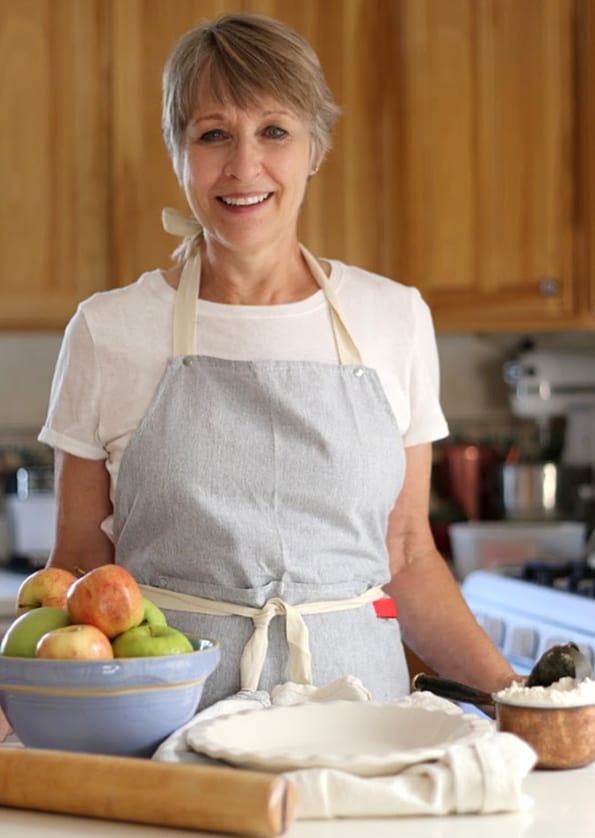
Hello there, I’m Jere’
From learning to cook on a farm in Indiana to culinary school in California, my passion for food is never-ending. Turning on my oven to bake something for friends and family is my happy place, and I am glad to be here at One Hot Oven® sharing sweet and savory family-friendly recipes for your cooking and baking inspiration.