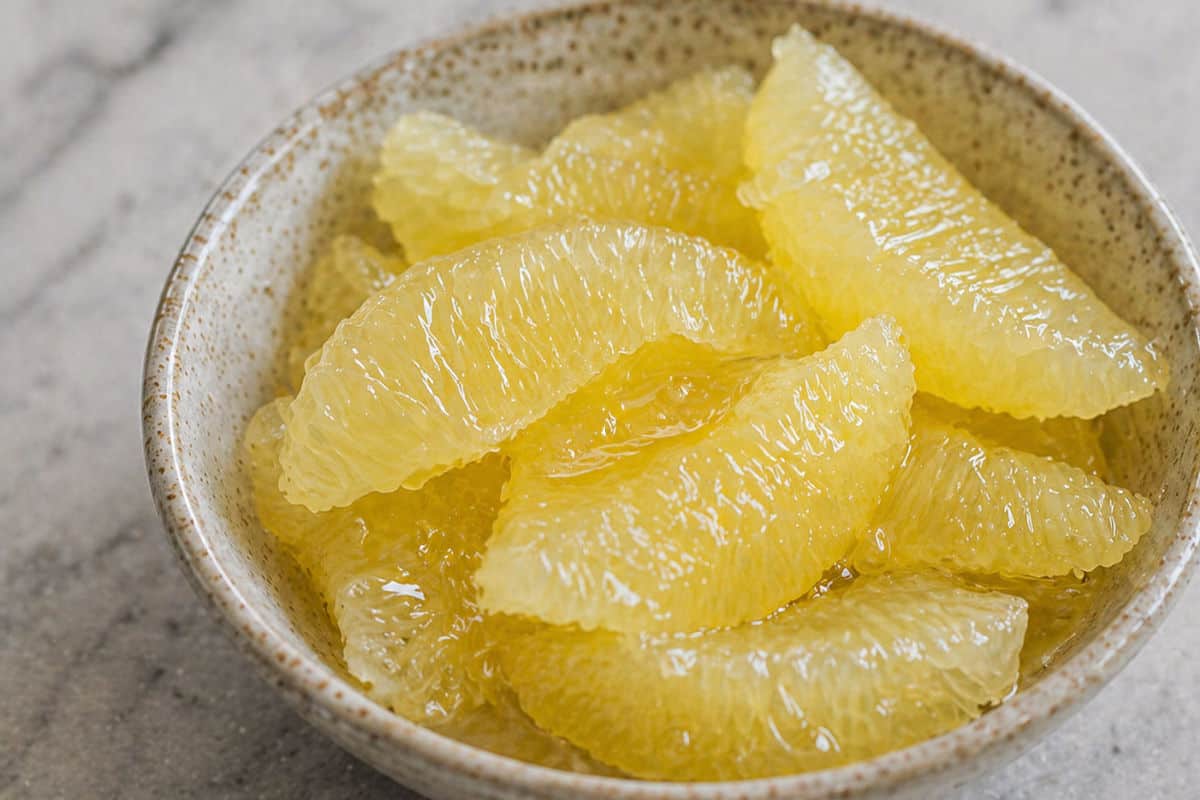
Learning how to supreme citrus (also called segmenting citrus) is a simple technique that removes the peel, pith, and membranes, leaving clean, juicy segments. It looks fancy on a plate, but once you do it a couple of times, it takes less than two minutes, and you’ll find countless ways to use these sections.
Want to save this recipe?
Enter your email & I’ll send it to your inbox. Plus, get great new recipes from me every week!
If you’ve ever bitten into a citrus slice and hit that bitter white pith, you know exactly why this matters.
Learning how to supreme citrus gives you clean, juicy segments with no peel, no seeds, and no bitterness. It’s a simple technique that works for lemons, oranges, and grapefruit, and once you try it, you won’t go back to slicing citrus the old way.
If you’ve ever bitten into a citrus slice and hit that bitter white pith, you know exactly why this matters.
Learning how to supreme citrus
I use citrus supremes in salads, on fish, and in desserts like this lemon bundt cake. Using supremes gives you that fresh pop of citrus. The pith is what makes citrus taste bitter, and when you remove it, all of that disappears. What you’re left with is pure, sweet-tart fruit that melts in your mouth.
You don’t need any special equipment, just a sharp knife and a cutting board. That’s it. This is the kind of technique you learn once and use forever, and I promise it’s easier than it looks the first time you try it.
This page may contain affiliate links. Please see my full DISCLOSURE for policy details.
What Does It Mean To Supreme Citrus
Supreming means cutting the fruit out of its membranes so all you’re left with is the tender flesh.
No peel.
No white pith.
No seeds.
Just clean, ready-to-use segments.
You can supreme any citrus: lemons, oranges, grapefruits, limes, blood oranges, tangerines and cara cara oranges. Each one works exactly the same way.
What You’ll Need
- Fresh citrus
- A sharp paring knife
- Cutting board
- A bowl to catch the juice and the segments
A sharp knife is important here. A dull blade drags, making cuts less clean. If your knife feels like it’s pushing instead of slicing, sharpen it before you start.
Keep a small bowl nearby to catch the juice as you work. Don’t let that go to waste; use this juice in salad dressings, marinades and drinks
Step-by-Step Instructions To Supreme Citrus
Step 1: Trim the ends
Slice off the top and bottom of the citrus so it sits flat on your cutting board.
This gives you a steady base and keeps things from slipping around.
Step 2: Cut away the peel and the pith
Stand the fruit upright and slice downward, following the curve of the fruit.
Remove both:
- the outer peel
- The white pith underneath
Take your time and rotate as you go. If you see any pith left behind, trim it off. That’s where the bitterness comes from.
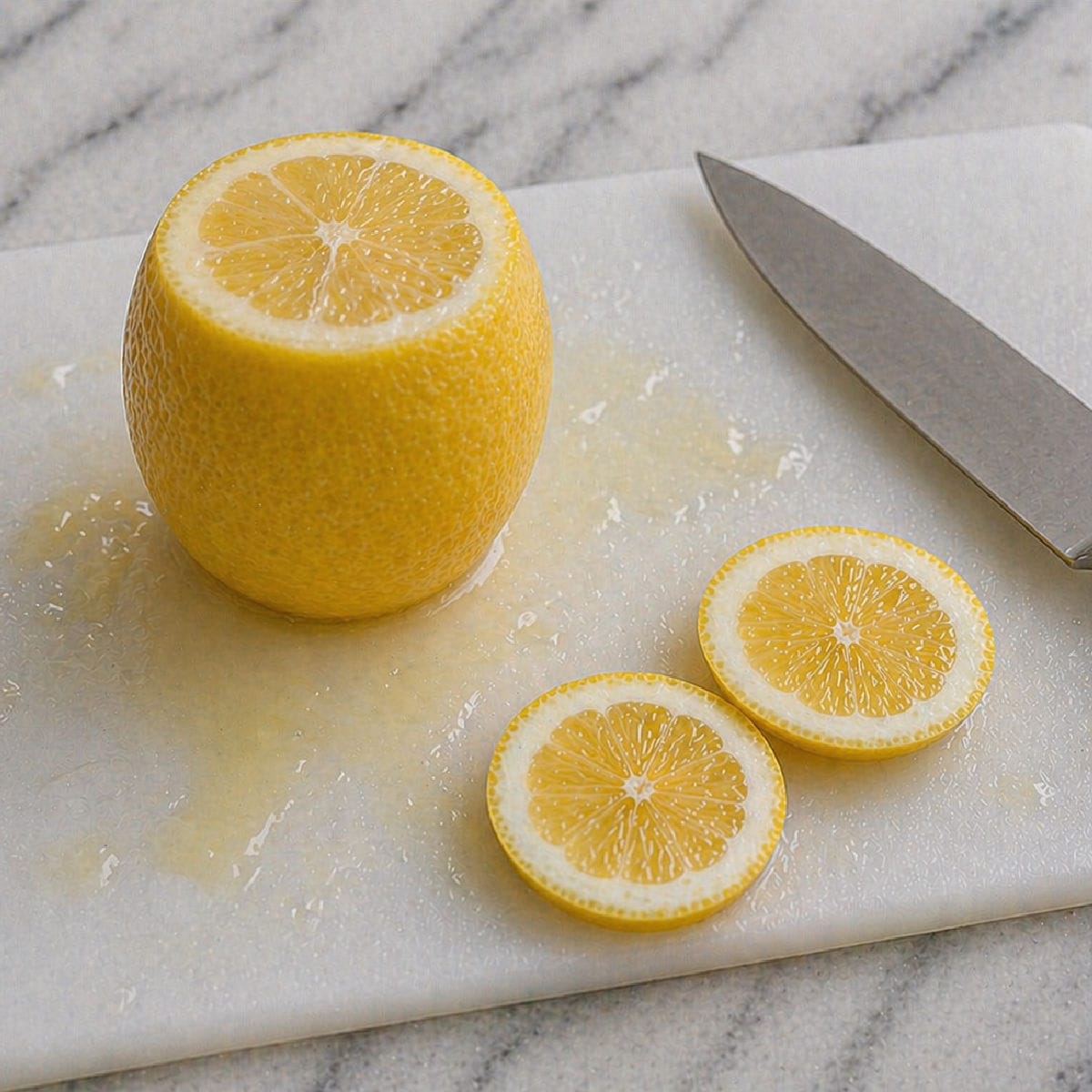
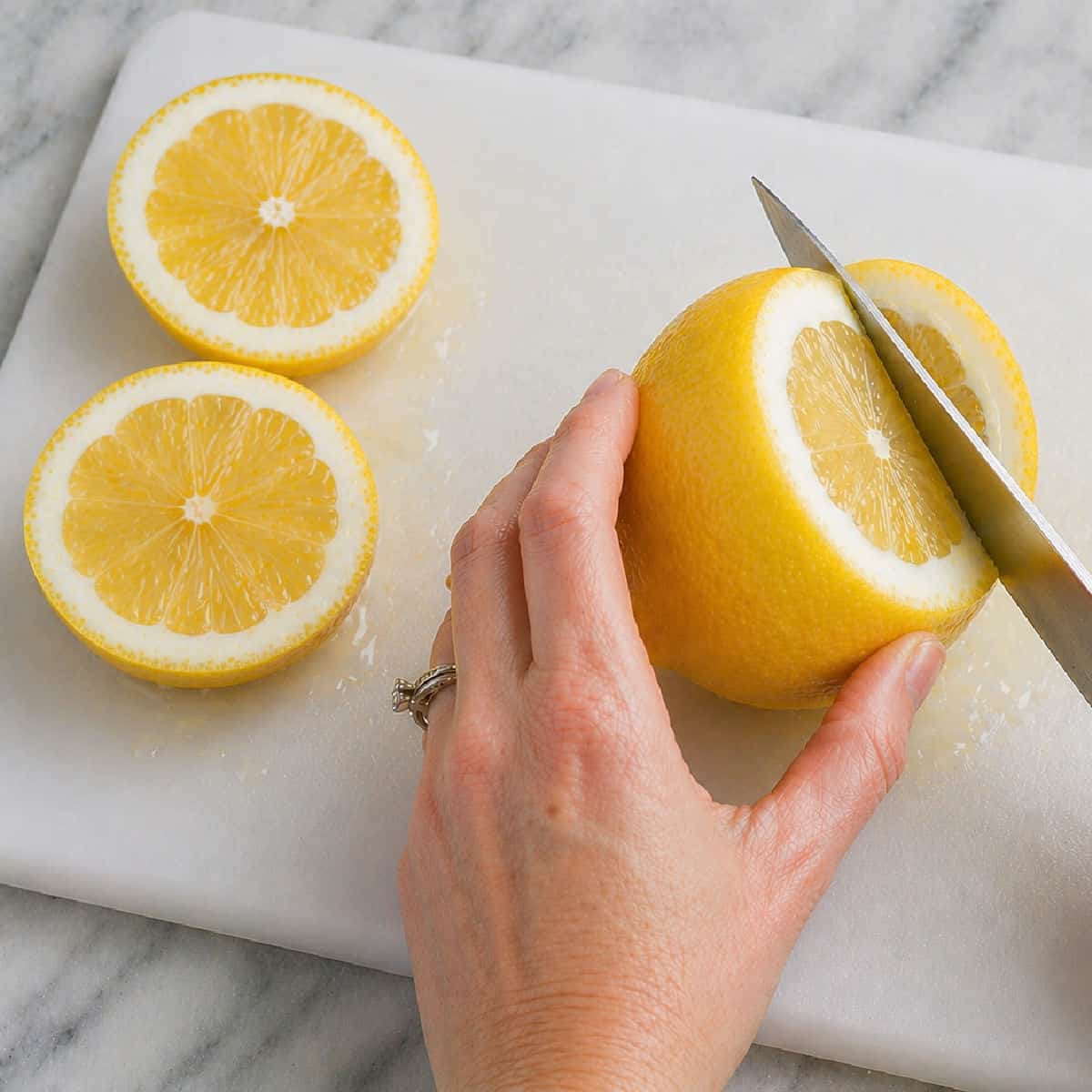

Before you cut away the peel, this is a good time to zest the lemon, if needed. Once the peel is gone, you can’t go back. Here’s how to zest a lemon so you get the most flavor without the bitter white pith.
A good rule of thumb: zest before you squeeze; squeeze after.
Step 3: Cut between the membranes
Hold the peeled citrus in your hand. Find the thin lines between each segment. Slide your knife along the membrane’s edge, then along the other edge.
The segment should release cleanly.
Step 4: Continue cutting segments
As you continue cutting, the citrus segments will drop right out into your bowl. Work your way around until all the sections are removed.
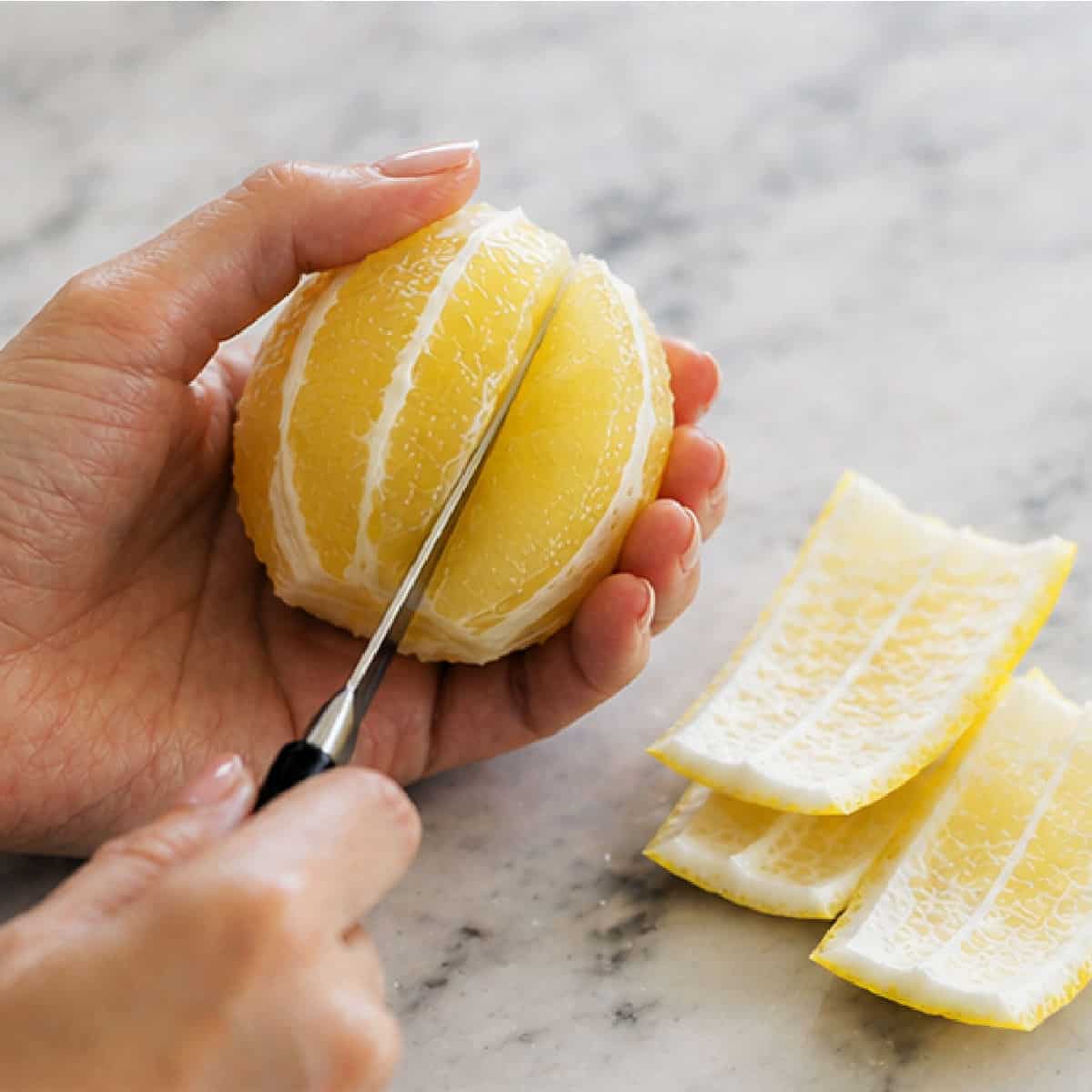
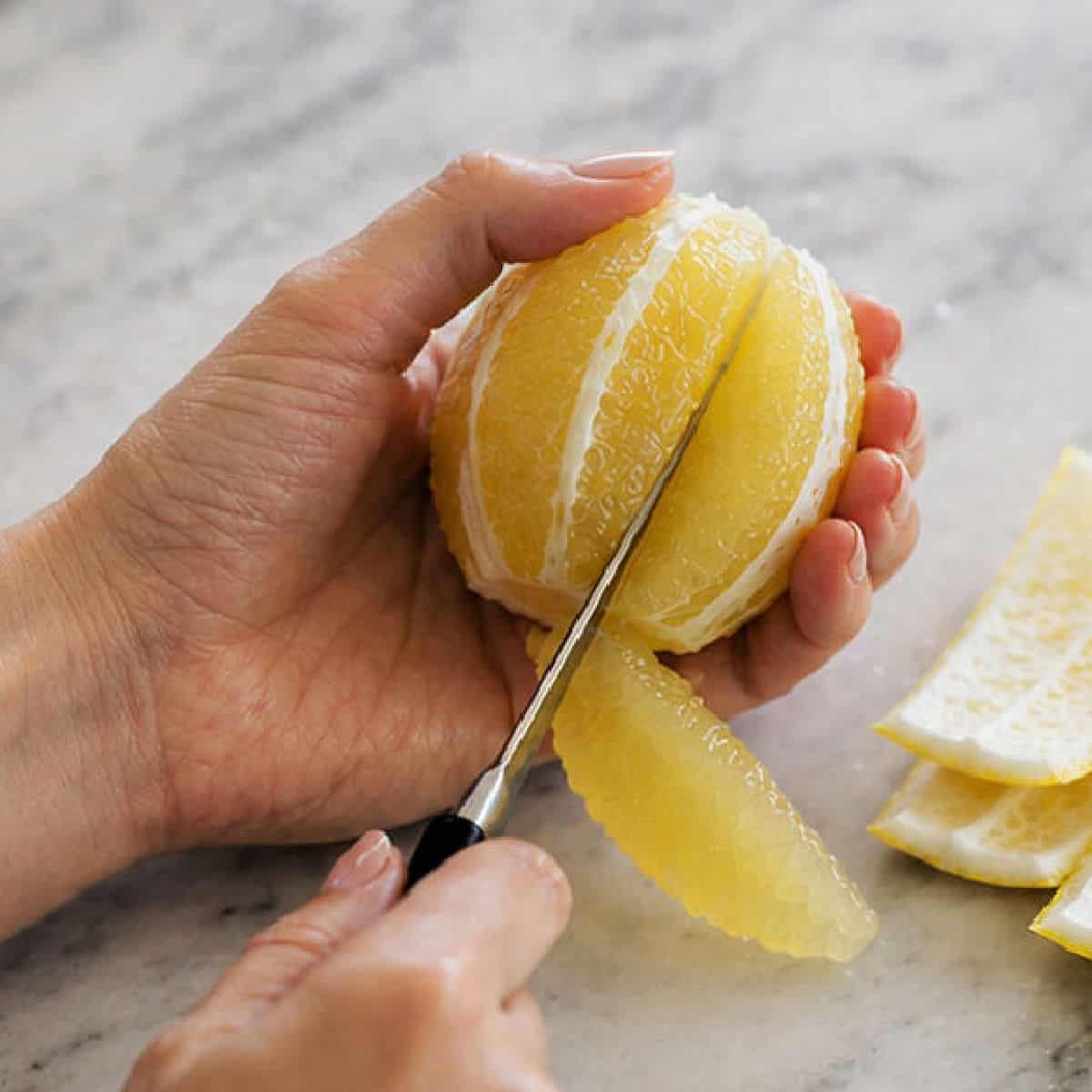
Step 5: Squeeze the remaining juice
Once all the segments are out, you’ll be left holding the membrane core. There’s still plenty of juice left in there. I usually squeeze it right into the bowl and use it right away. If you’ve ever wondered how much juice you actually get from a lemon, here’s a quick guide. to the juice of one lemon and what to expect.
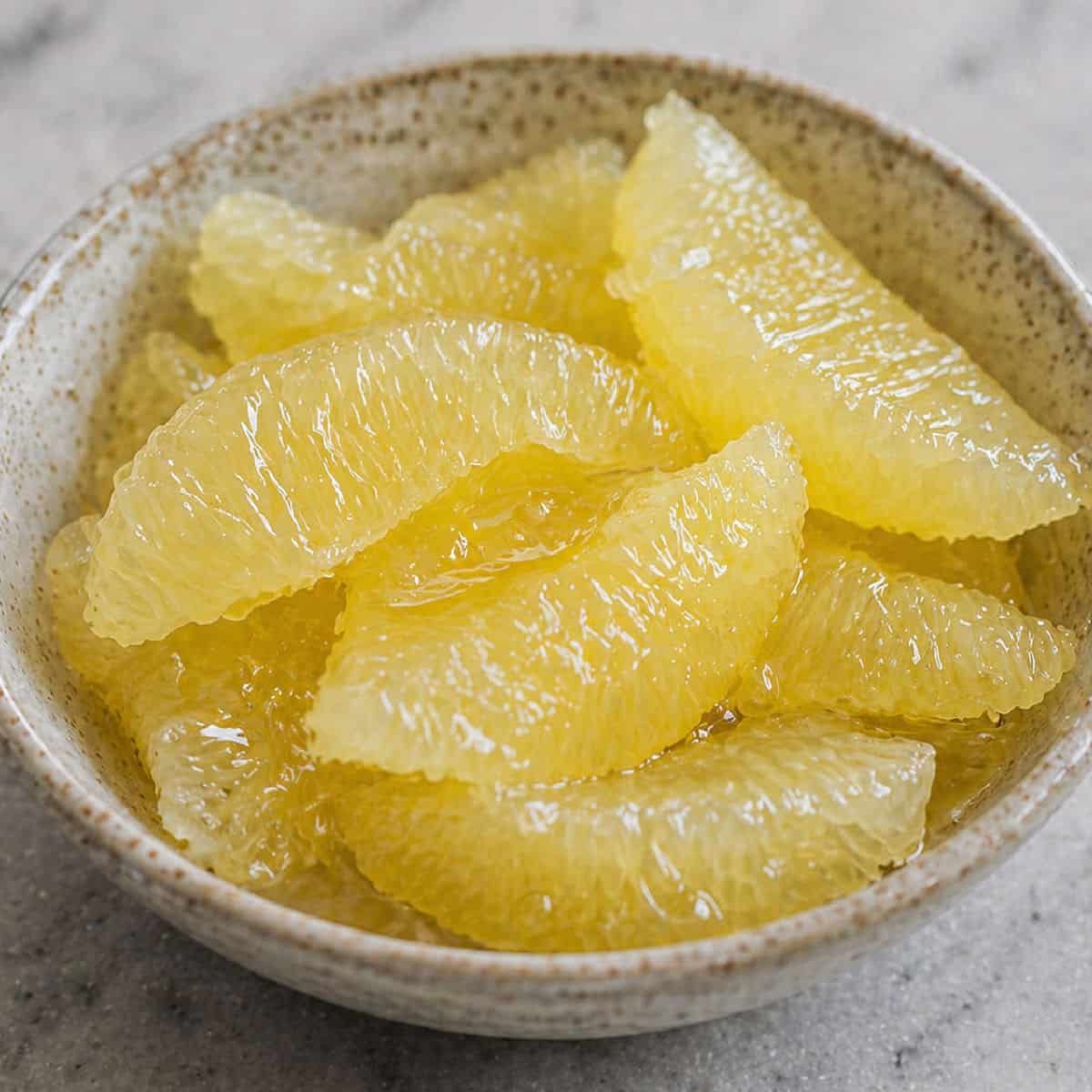
What You End Up With
Clean, glossy citrus segments that are:
- Tender
- Juicy
- Completely seed-free
Which Citrus Works Best
Not all citrus behaves the same, and it’s worth knowing the difference before you start.
Oranges
These are the easiest to work with. They’re firm, hold their shape, and give you clean segments.
Grapefruit
This gives you larger segments and very defined membranes, making these great for supreming.
Lemons
These are a little smaller and softer, so they take a lighter touch. They’re perfect for finishing dishes where you want a pop of brightness without all the bitterness.
Limes
Small and a little trickier because of their size, but still worth it for toppings and garnishes. You won’t get big, clean segments, but you’ll get small bursts of fresh lime that work well with tacos, grilled meats, or salads.
Do All Citrus Need To Be Supremed?
No, and it’s good to know that some citrus don’t need to be supremed.
Lemons, oranges and grapefruits benefit the most because of their thicker membranes and pith.
Mandarins are different. They peel easily and already separate into natural segments; I don’t bother supreming them. I just break them apart and use them as-is.
That’s exactly how I use them in my Mandarin Orange Bundt Cake. The segments are already tender, so there’s no need for all that knife work.
Common Mistakes and How To Fix Them
Too much pith left on the fruit
Go back and trim it off before segmenting.
Segments are tearing instead of releasing cleanly
Your knife isn’t cutting next to the membrane. Stay close and let the blade do the work.
Juice going everywhere
It’s going to happen. Work over a bowl so you can catch it rather than lose it.
If your citrus is very soft, it will be harder to cut cleanly and a bit messier. If you want neat segments, use fruit that still feels firm when you press it.
Can You Supreme Citrus Ahead of Time?
Yes. Store segments in the fridge for up to 2 days. Keep them in their juice so they don’t dry out.
How to Use Citrus Supremes
Once you’ve made citrus supremes, you’ll start finding ways to use them everywhere.
- Toss into green salads where you want a fresh pop of flavor. Oranges work especially well in this Rainbow Salad with Balsamic Dressing.
- Add to fruit salads like my Cranberry Winter Salad where oranges and grapefruits add great citrus flavor.
- Spoon over yogurt or simple desserts for a quick finish.
- They’re also great served with fish or chicken, where a little citrus cuts through the dish.

Subscribe here for more great recipes, and follow One Hot Oven for more tasty sweet and savory recipes! Pinterest | Instagram | Facebook
Tried it? Rate ⭐⭐⭐⭐⭐ & comment below; your feedback keeps the oven mitts flying here at One Hot Oven.
Thank you for stopping by the One Hot Oven blog. Please leave a comment to say hello, or just let me know what you are baking these days. I always love hearing from fellow bakers. Have any questions or just want to chat about the recipe? Please visit my about page for information, and I’ll be happy to help!
About Jere’
From learning to cook on a farm in Indiana to culinary school in California, my passion for food is never-ending. Turning on my oven to bake something for friends and family is my happy place, and I am glad to be here at One Hot Oven, sharing sweet and savory, family-friendly recipes for your cooking and baking inspiration.