

If you love adding a burst of tangy flavor to your dishes, then knowing how to zest a lemon like a pro is a skill you want to master. Explore the ultimate guide by zesting a lemon to add a zesty twist to your culinary creations.

Want to save this recipe?
Enter your email & I’ll send it to your inbox. Plus, get great new recipes from me every week!
This page may contain affiliate links; please see my disclosure for policy details. I earn commissions if you shop through the links on this page.
Lemon zest is the colorful outer peel of the lemon, containing aromatic oils that can elevate the flavor of sweet and savory recipes.
Different methods of zesting a lemon
When zesting a lemon, you can try several different methods. Each technique offers unique advantages and can be used depending on your preference and available tools.
How To Zest A Lemon With A Microplane Zester
This is my favorite method and is ideal for achieving a light and fluffy texture, perfect for incorporating zest into your favorite recipes.
Using a microplane zester, hold the lemon firmly and gently scrape the zester across the peel. The sharp blades of the zester will extract fine, fragrant zest from the lemon, leaving behind the bitter pith.
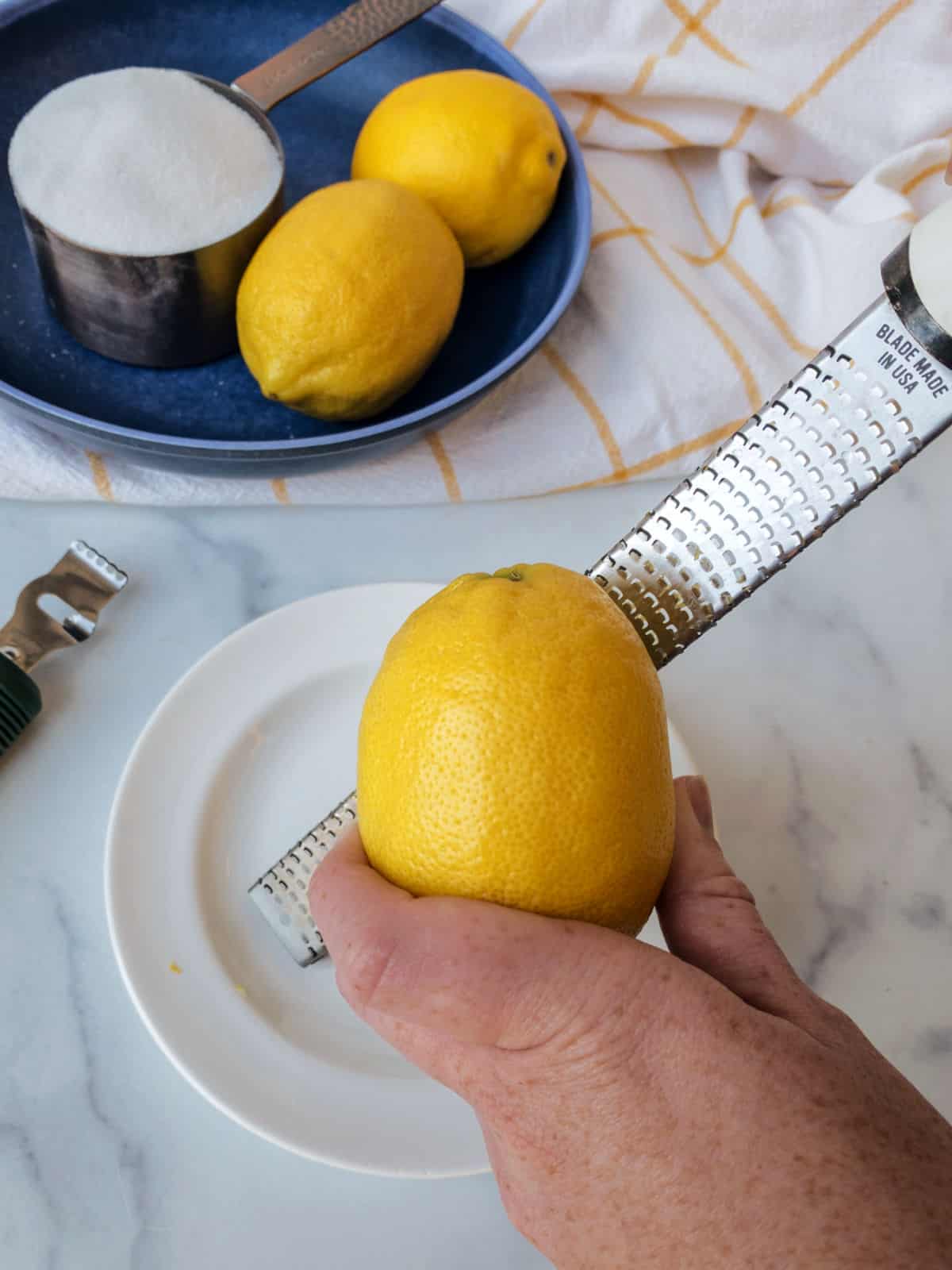
“My preferred method for zesting a lemon is using a fine microplane grater. This allows you to remove just the zest of the lemon without including the bitter pith of the lemon as well.”
— Gen La Rocca, Two Cloves Kitchen
How To Zest A Lemon With A Box Grater
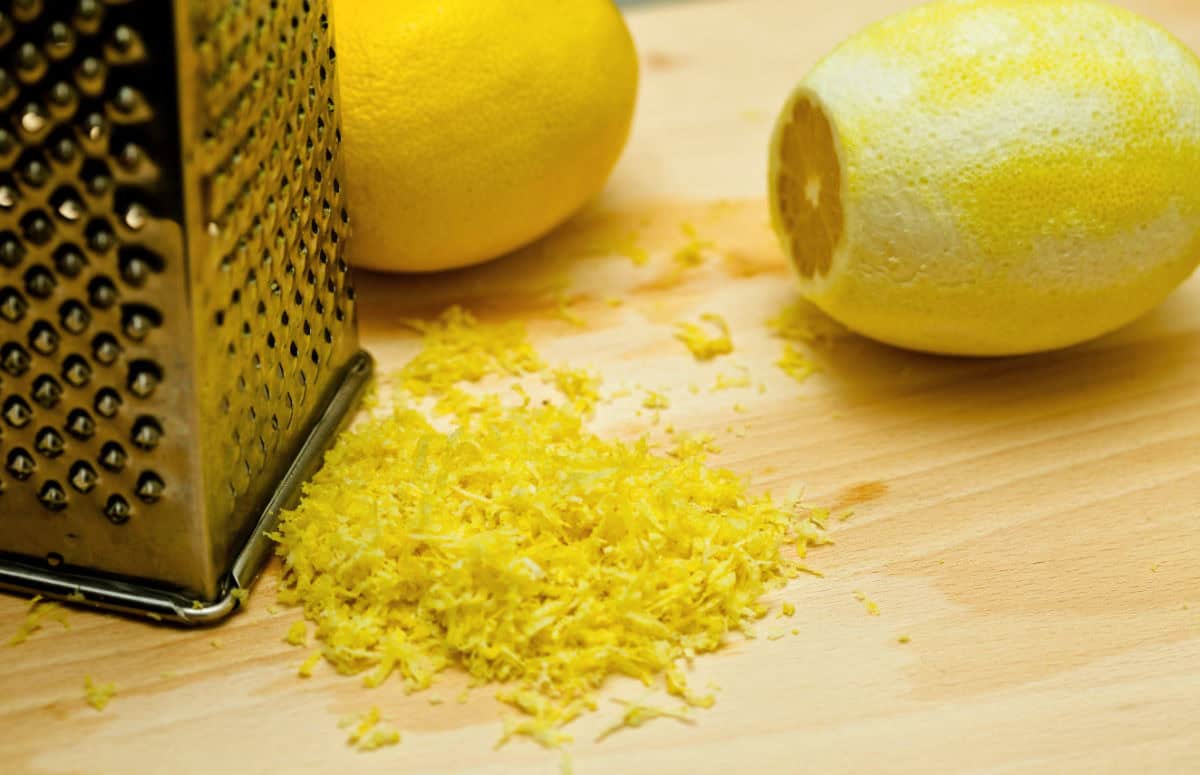
A box grater is an excellent alternative for zesting a lemon. By rubbing the lemon against the finest side of the grater, you can create tiny zest shreds that add a burst of citrus flavor to your dishes. The box grater method may yield slightly larger zest pieces than a microplane zester, but it is still a convenient way to infuse your recipes with lemon essence.
How To Zest A Lemon With A Vegetable Peeler
The following method for zesting a lemon is to use a vegetable peeler. Run the peeler along the lemon’s peel, applying gentle pressure to remove thin strips of zest. Be careful not to include the bitter white pith in your zest.
You can further mince the strips with a knife for more finely grated zest.
How To Zest A Lemon With A Channel Knife
Using a channel knife to zest lemons is a great way to get long, thin strips of lemon peel with minimal effort. This tool has a small blade with a sharp edge and small holes that easily cut through the outer layer of the lemon, leaving the bitter white pith behind. To use it, hold the lemon firmly and run the channel knife across the surface, applying gentle pressure. The result is perfect strips of zest for garnishing cocktails and desserts or adding a burst of citrus flavor to your dishes.

How To Make Lemon Zest Twists
Cut thin, long strips of zest from the lemon’s peel, carefully avoiding the pith. Gently twist the strips to give them a spiral shape, which you can use as a garnish for drinks or desserts. You can create zest twists using a citrus twist peeler or a small paring knife for a decorative touch.
Tips for zesting like a pro
To take your lemon zest game to the next level, consider these tips:
- Use organic lemons: Organic lemons are free from pesticides and chemicals, making them ideal for zesting. Whatever type of lemons you are going to use, wash them well before zesting.
- Zest before juicing: It is easier to zest a whole lemon than a squeezed one, so zest it first before juicing.
- Rotate the lemon: Rotate the lemon as you zest it to ensure you get an even distribution of zest and avoid the bitter pith.
- Freeze leftover zest: If you have extra lemon zest, you can freeze it in an airtight container.
Was to use lemon zest in baking
Fresh lemon zest adds bright citrus flavor that bottled juice just can’t replicate. I use it constantly in baking because it brings out a cleaner, fresher lemon flavor in cakes, cookies, glazes and quick breads.
- One of my favorite ways to use zest is in baked goods like Lemon Shortbread Cookies, where the oils from the zest give the cookies a stronger lemon flavor without making them sour.
- Lemon zest also works beautifully in cakes. My Lemon Bundt Cake and Lemon Loaf Cake both use fresh zest to keep the lemon flavor bright even after baking. The zest pairs especially well with simple lemon glazes and buttery cake batters.
- You can also stir lemon zest into homemade Lemon Sugar for topping cookies, cakes, muffins, tea cakes, or even the rim of a cocktail glass.
- And sometimes the simplest use is the best. A little fresh zest scattered over cupcakes, pies, or frosted cookies adds color, aroma, and extra citrus flavor right before serving.
- Sprinkle lemon zest over cakes, cupcakes, cookies or pies to enhance sweetness.
Add lemon zest to beverages. Lemon zest in cocktails and drinks like lemon water adds a vibrant citrus kick and aromatic essence, enhancing the beverage’s refreshing and revitalizing qualities.
Get The Tools
Other citrus fruits for zesting
While lemon zest is undoubtedly popular, you can zest other citrus fruits. Here are a few that work well for zesting:
- Orange zest: Orange zest adds a sweet and citrusy aroma to dishes and is delightful in baked goods.
- Lime zest: Lime zest offers a tangy and refreshing twist, making it perfect for cocktails, salsas, marinades and even pies.
- Grapefruit zest: Grapefruit zest adds a slightly bitter and floral note to dishes, complementing sweet and savory recipes.
Share the zesty knowledge
Now that you have the skills to zest a lemon like a pro and have discovered various creative uses for lemon zest, why not share the zesty knowledge with others?
Spread the joy of zest by sharing these tips and techniques with your friends, family or fellow food enthusiasts.
Remember, zest is the secret ingredient that elevates your dishes and makes you shine as a cook.

Subscribe here for more great recipes, and follow One Hot Oven for more tasty sweet and savory recipes! Pinterest | Instagram | Facebook
Thank you for stopping by the One Hot Oven blog. Please leave a comment to say hello or tell me what you are baking; I always love hearing from fellow bakers. Do you have any questions or want to chat about the recipe? Please visit my About page for information, and I’ll be happy to help!

Hello there, I’m Jere’
From learning to cook on a farm in Indiana to culinary school in California, my passion for food is never-ending. Turning on my oven to bake something for friends and family is my happy place, and I am glad to be here at One Hot Oven sharing sweet and savory family-friendly recipes for your cooking and baking inspiration.

This article originally appeared on Food Drink Life.






Zester should be used on TOP of the lemon, not the other way around. Zest collects in the microplane grater which is then turned over and tapped to release the zest. Think of it as the lemon as the violin and the grater as the bow.